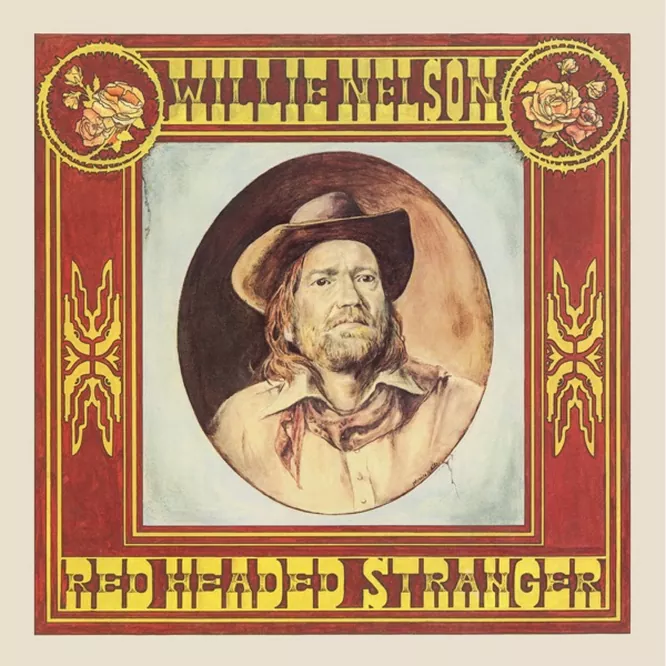
曲目列表(共 20 首)
- 0101.Time of the Preacher
- 0202.I Couldn't Believe It Was True
- 0303.Time of the Preacher Theme
- 0404.Medley- Blue Rock Montana - Red Headed Stranger
- 0505.Blue Eyes Crying In the Rain
- 0606.Red Headed Stranger
- 0707.Time of the Preacher Theme (Short Version)
- 0808.Just as I Am
- 0909.Denver
- 1010.O'er the Waves
- 1111.Down Yonder
- 1212.Can I Sleep in Your Arms
- 1313.Remember Me (When the Candle Lights Are Gleaming)
- 1414.Hands on the Wheel
- 1515.Bandera
- 1616.Bach Minuet in G
- 1717.I Can't Help It (If I'm Still In Love With You)
- 1818.A Maiden's Prayer
- 1919.Bonaparte's Retreat
- 20Few songwriters and performers have played a vital role in post-rock & roll country music as Willie Nelson. Although he didn't become a star until the mid-'70s, he spent the 1960s writing songs that became hits for stars like Ray Price ("Night Life"), Patsy Cline ("Crazy"), Faron Young ("Hello Walls"), and Billy Walker ("Funny How Time Slips Away"), as well as releasing a series of records on Liberty and RCA that earned him a small but devoted cult following. During the early '70s, Nelson abandoned Nashville for his native Texas, setting up shop with the redneck hippies in Austin and taking control of his music on the landmark Shotgun Willie (1973) and Phases & Stages (1974). He found a kindred spirit in Waylon Jennings and, together, they spearheaded the outlaw country movement that finally made him a star by 1975. Following the crossover success of that year's Red Headed Stranger and "Blue Eyes Crying in the Rain," Willie became a genuine success, as recognizable in pop circles as he was to country audiences; in addition to recording, he also launched an acting career in the early '80s. Even when he was a star, he never played it safe musically. Instead, he borrowed from a wide variety of styles, including traditional pop -- his biggest album was 1978's Stardust, a collection of interpretations of the Great American Songbook -- Western swing, jazz, traditional country, cowboy songs, honky tonk, rock & roll, folk, and the blues, creating a distinctive, elastic hybrid. Nelson remained at the top of the country charts until the mid-'80s, when his lifestyle -- which had always been close to the outlaw clichés with which his music flirted -- began to spiral out of control, culminating in an infamous battle with the IRS in the late '80s. Nelson's hit singles dried up by the early '90s, but he kept performing and recording at a prodigious pace, both on his own and in a variety of collaborative settings, including the country supergroup the Highwaymen. Occasionally, one of Willie's albums would garner attention from a wider audience, such as 1993's Don Was-produced Across the Borderline or 1998's Teatro, but by the 2000s, he was a beloved figure in American pop culture, embraced for his music, humor, and hippie lifestyle. Nelson wasn't one to rest on his laurels, either. During the 2010s, he struck up a fruitful collaboration with producer Buddy Cannon, who helmed a series of relaxed, mortality-minded albums over the next decade, a string that continued through 2024's The Border. He also recorded several wide-ranging genre covers projects with his sons, Lukas and Micah, the latter of whom produced 2024's Last Leaf on the Tree. Nelson's habit of honoring other songwriters continued on 2025's Oh What a Beautiful World, which consisted entirely of Rodney Crowell songs, and Workin' Man: Willie Sings Merle, featuring eleven Merle Haggard tunes, which was also issued in 2025. 2026's Dream Chaser was a thoughtful set of tunes with a personal feel.